EMS Suit for Gyms: Why Top Fitness Studios Are Making the Switch
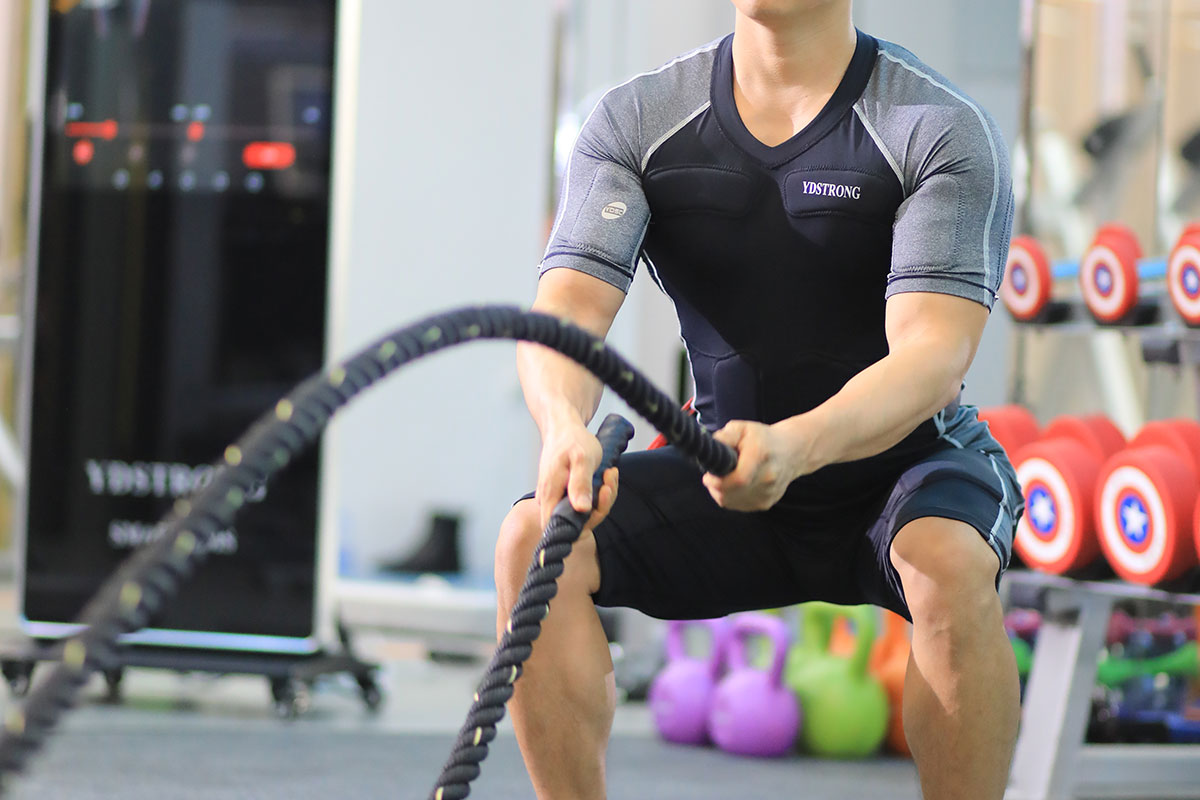
A gym owner in Manchester summed it up perfectly: “My members aren’t leaving because they’re unhappy. They’re leaving because they’re busy.”
He is not an isolated case. Across Europe, the Middle East, and Southeast Asia, fitness studio owners face the same dilemma: members are eager to see results but lack the time for traditional training. Many studios ultimately choose EMS suit for gyms – a 20-minute full-body workout system that seamlessly integrates into commercial course schedules.
This article analyzes why commercial EMS training suit has become one of the fastest-growing pieces of equipment in professional fitness studios. Whether you’re evaluating EMS training equipment for the first time or looking to expand an existing program, this guide covers the practical considerations that matter for commercial deployment.
The Problem With Traditional Group Training
Traditional gyms and clubs encounter some foreseeable bottlenecks:
Membership Growth Has Slowed
The traditional gym value proposition—”Come three times a week for 90 minutes each time”—has remained unchanged for decades. At the same time, members’ expectations have changed dramatically. People want efficient, results-driven training that fits into their busy schedules. If the services offered by a gym remain unchanged, while the needs of its members are constantly evolving, then the gym’s development will stagnate.
Inefficient use of space
A row of dumbbells occupies roughly 10 square meters but serves only one member at a time. During peak periods, this valuable real estate can only generate minimal returns. Most gyms have equipment scattered across their floors, which sits idle 80% of the day—yet members still complain about long wait times during the 20% peak usage periods (when everyone is present).
Members Want Faster Results — Or They Leave
Modern fitness enthusiasts are often short on time and lack patience. If they don’t see visible changes within weeks, they will unsubscribe. Traditional training programs require 4-6 training sessions per week for several months to achieve significant results.This increases the risk of member churn, which accumulates over each billing cycle. When a faster alternative becomes available, members will vote with their wallets.
Therefore, an EMS suit for gyms becomes a good option. This doesn’t replace your existing model, but rather enhance them—allowing you to offer high-quality, effective classes, thus differentiating your studio from those cheap gyms across the street.
Why “EMS Suit for Gyms” Is a Different Product Category
It needs to be clarified that a commercial EMS suit is not a consumer gadget, but a type of commercial fitness hardware engineered for high-frequency daily use.
1. A 20-Minute Session Delivers Full-Body Activation
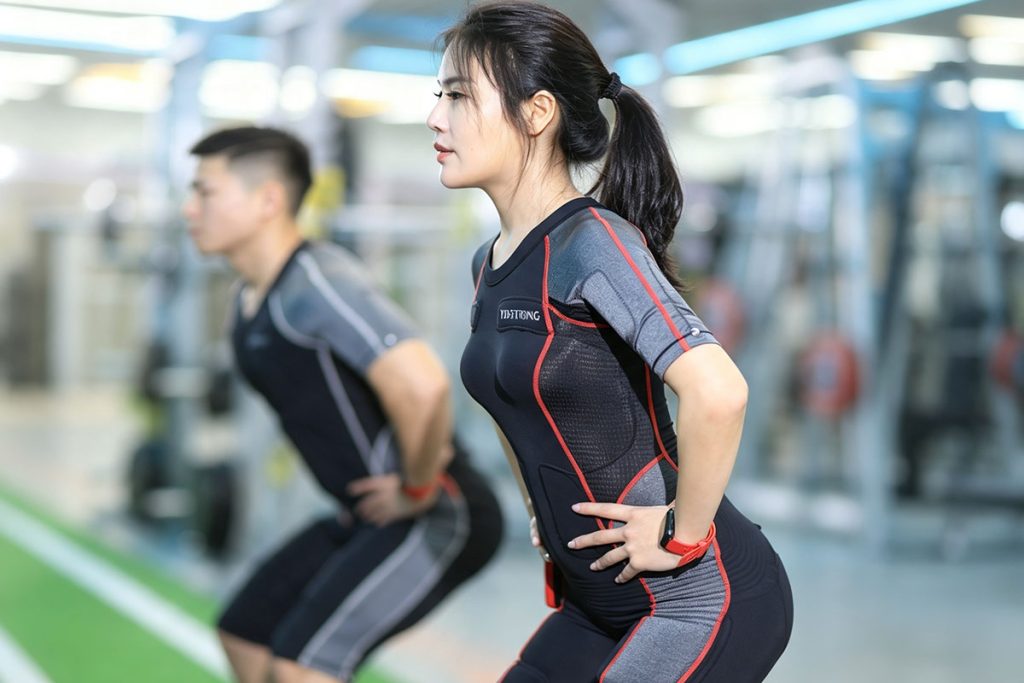
One EMS system can support up to 4 trainees simultaneously, with full-body muscle activation in just 20 minutes, while coach can safely monitor multiple trainees at once. This has completely changed the operating model for fitness studios that require continuous classes. What used to be a 60-minute class now takes only 20 minutes – meaning the same space can accommodate 2-3 times more members.
2. Dry Electrode Technology Eliminates Friction
Early EMS systems required water or gel application before every session. For a commercial studio running 6-8 sessions per day, this means 3-5 minutes of preparation time for each customer—resulting in lost revenue. Modern commercial EMS suits use advanced dry electrodes. Users simply put on the suit and train. No water, no gel, no mess.
3. Small Space, High Revenue Per Square Meter
A dry EMS training system requires only about 15-25 square meters of space, which can be easily integrated into your existing training area without the need for redesigning the layout.
In contrast to a row of treadmills or a free weight area, EMS takes up less space but offers excellent value for money (US$30-60 per session in most Western markets). Studios routinely report payback periods of 2-4 months on a 5-suit starter kit.
4. Higher Member Retention Through Faster Results
EMS (Electromuscular Stimulation) can be combined with strength training, functional training, and aerobic exercise. Shortening the training cycle while maintaining training effectiveness can improve customer satisfaction and customer retention.
When members see visible changes in 4-6 weeks instead of 4-6 months, they will not cancel their membership but will instead upgrade to a premium plan.
5. Gain new revenue streams without hiring new people
Implementing EMS as an add-on course for existing members creates efficient training at affordable prices. Compared to purchasing traditional equipment, you can get a quick return on investment with a low investment.
Pre-set programs can reduce employee training costs. Your existing personal trainers can start EMS courses with just half a day of training—no new staff required.
Therefore, when you introduce EMS fitness raining into existing group classes, you’re enhancing your services rather than replacing your current model.
The YDstrong Approach: YD-209C Wireless EMS Suit
At YDstrong, we’ve spent 20+ years researching advanced sensing materials and rehabilitation medicine applications. Our product line for gyms reflects this deep engineering background — but one product stands out as the ideal choice for fitness studios venturing into the EMS field: YD-209C Wireless EMS Training Suit.
Why the YD-209C Works for Commercial Gyms
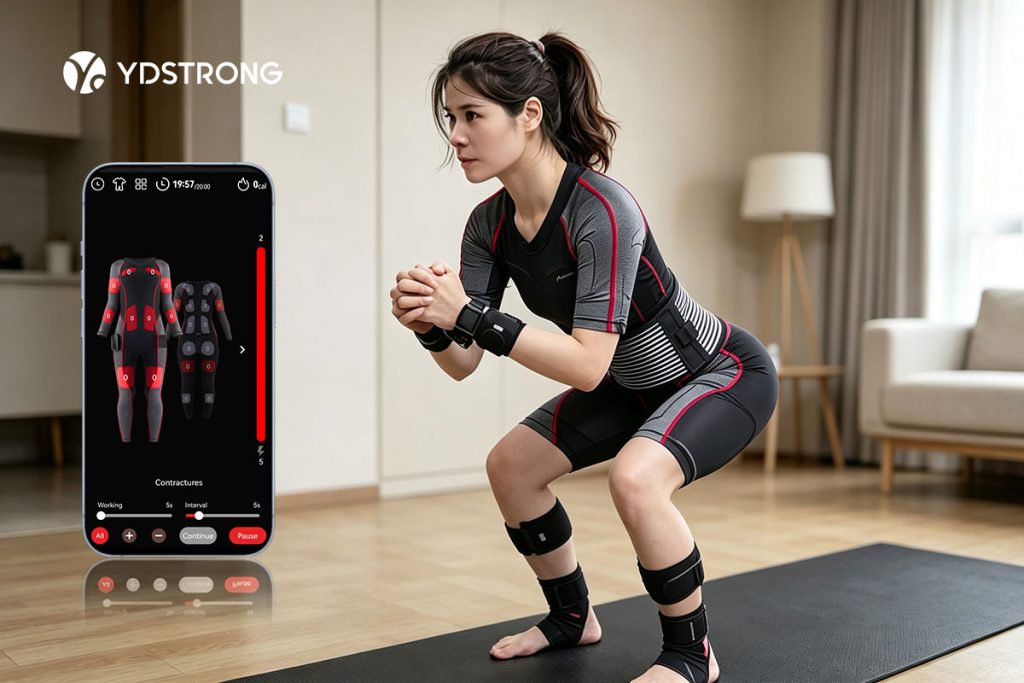
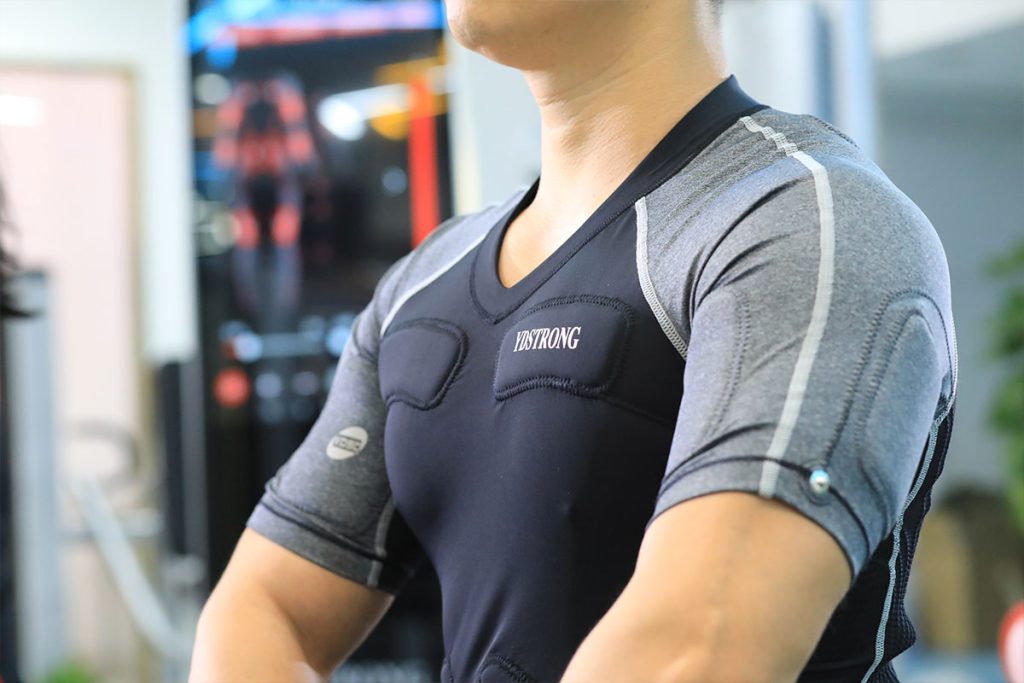
The EMS Training Suit YD-209C is with 10-pulse channel with 20 silicone electrode pads, providing comprehensive full-body muscle coverage. Its defining feature is dry electrode technology — no water, no gel, no preparation friction. A member puts on the suit, and the session begins. Compared to similar type of wireless EMS suit, we have following main features:
- Wireless EMS managemnet with constant current design: The output current remains consistent regardless of changes in skin resistance, electrode contact or body impedance.
- Left and Right balance adjustment
- Four layer silver fiber fabric silicon electrodes
- Metal cables: it’s insulated, more safer and durable.It’s granted an invention patent.
If you’re exploring how a commercial EMS suit fits into your studio’s space and business model, then YD-209C EMS suit represents the most balanced entry point — professional-grade capabilities without the complexity of industrial-scale systems.
Final Thought
The shift toward EMS in the commercial fitness industry is not a trend, but a structural change in how studios operate — driven by members who want better results in less time, and operators who want higher revenue per square meter.
A professional EMS suit for fitness studios isn’t a gadget, but rather an essential infrastructure. Studios that have succeeded with EMS training suits recognize that their members’ time is their most valuable resource and choose manufacturers who truly understand that the performance of training suits depends on the engineering behind them.
Want to see how a wireless EMS suit could fit into your studio’s economics? View the full commercial EMS product line to learn more about specifications, customization options, and OEM/ODM support.